Engineered to excel in tropical maritime environments. These luffing and topless tower cranes provide optimal spatial clearance, high salt-spray resistance, and structural integrity under maximum wind loads.
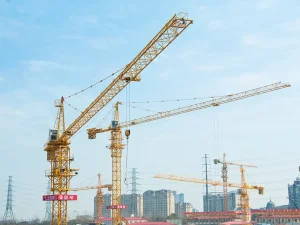
Designed for narrow coral atolls where airspace is restricted. Features compact out-of-service parking and high wind-velocity adaptability.
Get Technical Datasheet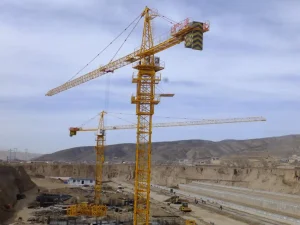
20-ton capacity configuration optimized for port infrastructure development and structural assembly in corrosive coastal zones.
Get Technical Datasheet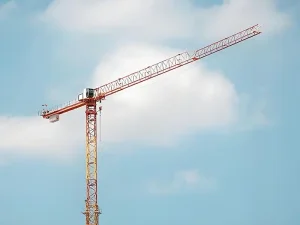
High-capacity luffing system engineered for major maritime construction, bridge foundations, and reef development projects.
Get Technical Datasheet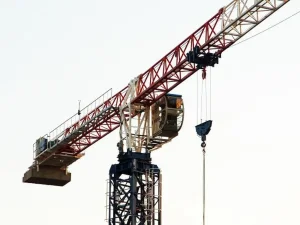
Flat-top structure minimizes wind resistance during high-velocity tropical storms. Features swift assembly mechanisms.
Get Technical DatasheetA strategic analysis of modern lifting logistics, geotechnical limitations, and climate-resilience requirements for tower crane operations in the Republic of Kiribati.
Kiribati's unique geography—composed of 33 coral atolls and reef islands spanning 3.5 million square kilometers—presents extraordinary civil engineering challenges. Unlike continental regions, the soil profile in hubs like South Tarawa consists primarily of highly permeable coral sand, sediment, and shallow water tables. Tower crane foundations must account for these low-bearing-capacity soils.
Shandong Dazheng's engineering team designs custom gravity-base anchoring systems and micro-pile configurations that distribute structural weight evenly without compromising the fragile coral limestone substrate. Our concrete gravity foundations are simulated under severe cyclic loading to ensure maximum structural stability.
Located in the equatorial Pacific, Kiribati is subject to strong winds, monsoon seasons, and ocean swells. Tower cranes deployed on key initiatives—such as the Betio Port upgrades or climate-adaptation seawall construction—must be engineered for out-of-service wind speeds exceeding 55 m/s.
By leveraging topless (flat-top) configurations, such as our GHP series, we eliminate the traditional cathead and tie rods. This reduction in overall height and surface area significantly lowers the overturning moment caused by heavy ocean drafts, ensuring your job site remains secure during adverse weather events.
Salt spray and relative humidity exceeding 80% year-round create a high-corrosive atmosphere. Standard paint systems fail within months, leading to structural fatigue. Dazheng's specialized cranes for the Micronesia region feature:
Explore our structural categories, precision engineered to deliver reliability, safety, and operational efficiency across diverse topography.

The GHP8030-20 flat top tower crane from Shandong Dazheng International Trade Co., Ltd. is the pinnacle of modular engineering, offering superior tip load performance and streamlined erection.
Request Quote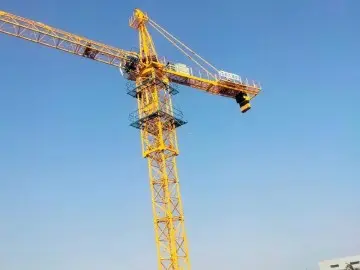
With a maximum boom length of 55 meters, the GHP7524-18 can easily cover a wide working area. Its design minimizes component wear under heavy cyclic lifting conditions.
Request Quote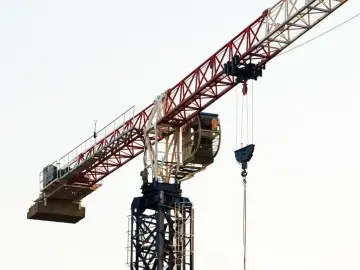
Unleash the potential of your construction projects with the GHP7524-16 topless tower crane from Shandong Dazheng, optimized for multi-crane overlap configurations.
Request Quote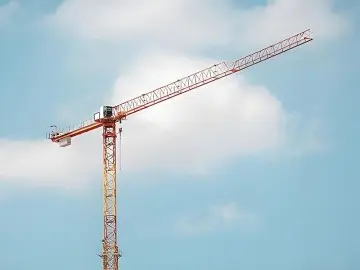
Meet the GHD6090-50 luffing tower crane, a pioneering heavy-lift machine designed for confined urban environments and deep-water wharf developments.
Request Quote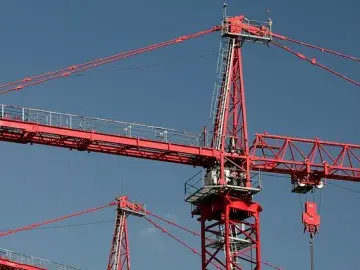
The GHT8030-25 Topkit tower crane embodies our pursuit of load capacity and height versatility, serving as the workhorse for high-rise infrastructure.
Request Quote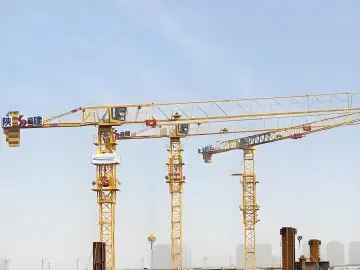
The GHT7050-20 top-mounted tower crane from Shandong Dazheng is a cutting-edge heavy hoist, integrating digital monitoring and advanced variable frequency speed control.
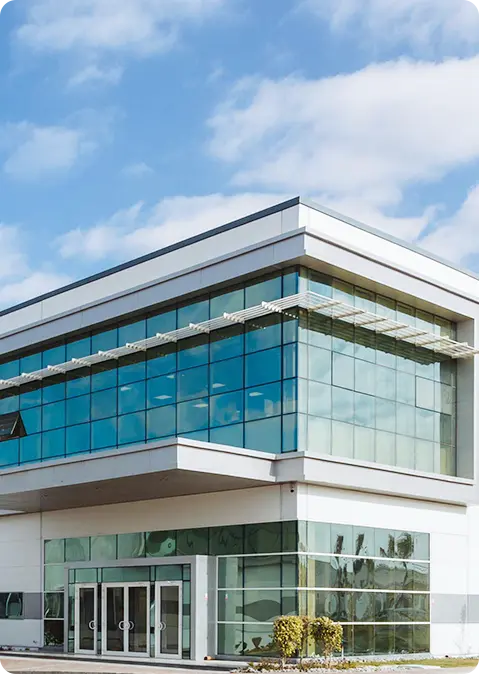
Request QuoteOur state-of-the-art production plant covers an area of 208 acres, housing 50,000 square meters of modern fabrication workshops designed for heavy machinery assembly. Shandong Dazheng International Trade Co., Ltd. ensures every crane structural member is constructed with absolute precision.
To guarantee load-bearing integrity and dimensional stability, we utilize leading-class CNC tooling, including:
These advanced machining centers allow us to fabricate precision gearboxes, slewing support structures, and mast sections with tolerances measured in microns. Additionally, 3D coordinate measuring instruments verify structural dimensions to guarantee safe, trouble-free structural assembly upon arrival in Kiribati.
At Shandong Dazheng, we combine field experience with theoretical design validation. Our engineering department operates in close technical cooperation with prestigious academic institutions, including Tsinghua University and Shandong University.
This technical synergy allows us to perform Finite Element Analysis (FEA) under simulated dynamic wind load conditions, optimizing steel distribution in tower crane booms. For projects in the South Pacific, this means stronger cranes built with light, efficient high-tensile steel, optimizing crane balance, lifting profiles, and shipping weight.

Navigating shipping routes to Tarawa and Christmas Island (Kiritimati) requires optimized container loading and protective packaging solutions.
All mast sections, jib elements, and counter-jibs are designed to fit standard 40ft High Cube (HC) shipping containers. This minimizes transport space, protects critical welds from saltwater exposure during transit, and significantly reduces ocean freight rates from Qingdao Port to Betio Port.
Slewing rings, motors, and electrical panels are wrapped in heavy-duty vapor corrosion inhibitor (VCI) film. Desiccant packs are distributed within electrical enclosures to neutralize condensation during trans-Pacific sea voyages.
Every structural pin, tension bar, and electrical harness is barcoded and documented. This ensures that field technicians on isolated atolls can easily verify parts inventory and speed up assembly without missing elements.
Our lifting solutions are recognized worldwide, spanning Southeast Asia, Europe, North America, and the Pacific region. We maintain a reliable supply chain to support the critical infrastructure needs of island nations.
From high-altitude structural lifting to localized ground transportation, our marine-optimized product lines deliver efficiency for Kiribati's construction projects.
Offers superior overlapping safety clearances on complex multi-crane jobsites. Extremely simple assembly layout.
Request Quote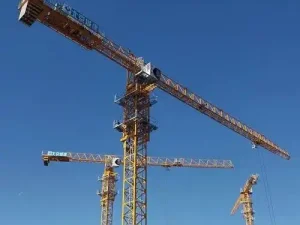
Built with premium BaoSteel structural steel. Designed to withstand sudden oceanic storm surges and wind shears.
Request Quote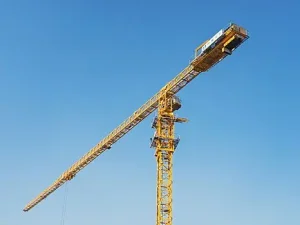
Classic structural tower crane featuring robust load distribution towers, making it highly reliable for structural steel erection.
Request Quote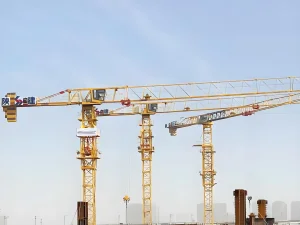
High-altitude lifting powerhouse featuring fine-tuned variable-frequency drives for millimetric positioning control.
Request Quote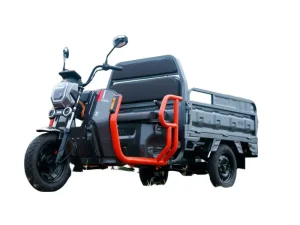
Eco-friendly electric tricycle, ideal for transporting tools and materials across narrow roads in atoll communities.
Request Quote
Highly efficient luffing layout with small counter-jib clearance. Engineered for restricted construction zones.
Request Quote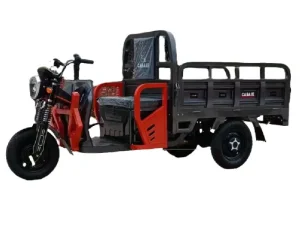
Compact utility tricycle designed to support port distribution logistics and light hauling on coral roads.
Request Quote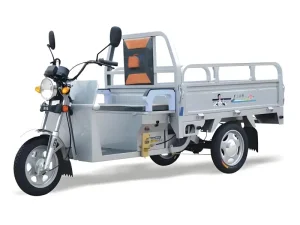
Combines structural strength with low energy consumption, ideal for zero-emission logistics in sensitive ecosystems.
Request QuoteFind expert answers to common questions regarding structural design, logistics, corrosion protection, and tower crane operations in Kiribati.
All our tower cranes destined for high-wind regions like Micronesia are calculated in accordance with FEM 1.001 standards and wind resistance classes. We utilize high-strength structural steel (Q355B and Q420) and optimized lattice boom designs that minimize wind shear load. In-service and out-of-service anchoring systems are custom-modeled to resist tropical cyclone winds of up to 55-60 m/s.
We apply a robust multi-coat paint system certified for ISO 12944 C5-M marine-grade environments. The process begins with shot-blasting to Sa 2.5 cleanliness, followed by a high-zinc epoxy primer, an epoxy micaceous iron oxide intermediate barrier, and a polyurethane topcoat. Critical mechanical joints, pins, bolts, and electronic control housings are constructed from stainless steel or hot-dip galvanized to prevent structural rust.
Given that coral sand has a low bearing capacity (often under 100-150 kPa), standard gravity bases are typically oversized or combined with micro-piling systems. Our engineering department works with your local geotechnical reports to customize concrete gravity base calculations, anchor frame designs, or ballast requirements, ensuring safe load distribution.
Cranes are loaded at Qingdao Port, China, and shipped via international container vessels or breakbulk carriers. Typical routes transition through major hubs like Fiji or Brisbane before arriving at Betio Port, Tarawa. The transit time is generally between 35 to 50 days, depending on carrier schedules. We provide all necessary packaging, custom clearance documents, and cargo securing to ensure safe transport.
Yes, our structural designs align with ISO, CE, and equivalent regional safety guidelines (such as AS/NZS 1418 for cranes). We supply complete structural calculations, proof of materials certifications, and functional testing records to support local regulatory compliance in Kiribati and the broader Pacific region.
Partner with Shandong Dazheng for robust structural design, direct factory pricing, and marine-engineered reliability. Contact our engineers today to discuss your project requirements.
Send Inquiry Now Dazheng Crane