Designed for the harsh wind-loads and humid marine environments of Trinidad, Tobago, and the wider Lesser Antilles.
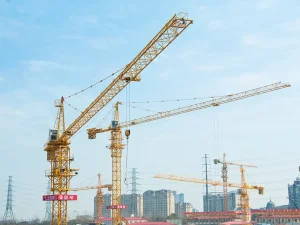
Highly maneuverable luffing jib designed for narrow air rights and dense commercial builds in downtown Port of Spain.
View Technical Specs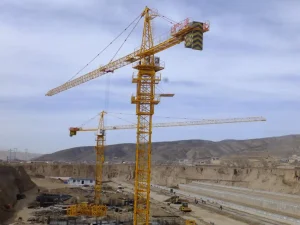
Heavy lifting specialist optimized for petrochemical refineries and offshore structural support logistics.
View Technical Specs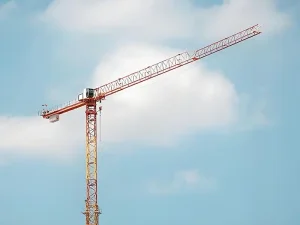
Ultra-capacity 50-ton lifter built for marine loading terminals and major industrial infrastructure pipelines.
View Technical Specs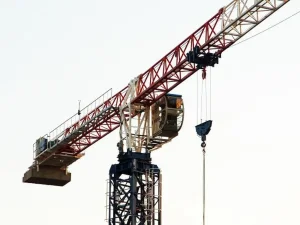
Flat-top modular construction crane designed for rapid erection, safety, and overlapping crane configurations.
View Technical SpecsAs the most industrialized nation in the Caribbean, Trinidad and Tobago represents a complex lifting environment. From the bustling petrochemical hubs of Point Lisas and the urban high-rises of Port of Spain, to the expanding hospitality infrastructure in Tobago, developers face unique meteorological and geographical challenges. Heavy civil engineering projects and industrial installations require tower cranes that offer more than simple load capacity; they demand structural configurations optimized for high wind resistance, coastal atmospheric corrosion mitigation, and operational adaptability.
Trinidad and Tobago sit at the southern edge of the Atlantic hurricane belt. While historically spared from the direct paths of major tropical cyclones compared to the northern Caribbean, changing meteorological trends necessitate compliance with stringent structural codes. Our tower cranes for this market are engineered in compliance with Fem 1.001 and EN 14439 design standards, providing robust stability under both operational wind pressures and out-of-service storm parameters. We integrate specialized anchoring bases and reinforced mast sections capable of withstanding out-of-service wind speeds up to 48 m/s (equivalent to Category 3 hurricane limits, and customizable up to Category 5 conditions).
Additionally, the transition between maritime port projects and inland civil sites requires flexible height configurations. Through structural calculations, we evaluate soil dynamics alongside local engineers to deliver customized structural ties and base frames.

Working within proximity of the Gulf of Paria or the open Atlantic Ocean exposes crane structural components to highly saline air, accelerating oxidation. To ensure long-term operational safety, Shandong Dazheng International Trade Co., Ltd. applies heavy-duty protective coating systems. Our steel structures undergo automated shot blasting to ISO Sa 2.5 cleanliness standards before receiving a multi-layer epoxy zinc-rich paint system. The final polyurethane topcoat provides resistance to UV radiation and chemical exposure, compliant with ISO 12944 C5-M (Marine) environmental ratings. This minimizes paint deterioration, preserves structural integrity, and reduces downtime for maintenance.
Deploying tower cranes in dense urban areas like Port of Spain or highly regulated zones like Point Lisas petrochemical estates requires careful selection of crane types. Our portfolio supports distinct infrastructure typologies:
| Crane Series | Typical Model | Core Design Benefit | Trinidad & Tobago Site Application |
|---|---|---|---|
| Luffing Jib (GHD Series) | GHD6090-50, GHD5522-12 | Variable working radius, no oversailing of adjacent airspace. Highly controllable. | Downtown Port of Spain high-rises, dense urban commercial zones, and port container terminals. |
| Topless / Flat-Top (GHP Series) | GHP8030-20, GHP7524-18 | Simplified multi-crane overlap clearances, faster erection times, minimized structural stress. | Chaguanas commercial complexes, Point Lisas refinery expansions, and mixed-use civil projects. |
| Topkit / Hammerhead (GHT Series) | GHT 7050-20, GHT 7032-14 | High cost-efficiency, classical design with rigid jib support, robust hook speed parameters. | Tobago resort developments, greenfield infrastructure, highway overpass installations. |
Urban density in Trinidad's municipal capitals often means cranes must operate adjacent to active roadways, existing properties, or high-voltage power lines. Under common law frameworks, oversailing third-party properties without authorization can lead to legal injunctions and project delays. The GHD series of Luffing Tower Cranes addresses this issue. With a luffing mechanism allowing the jib to raise from 15° to 85° relative to the mast, these units operate within a restricted spatial footprint, ensuring all lifting occurs strictly within the designated boundary lines.
On large industrial projects where multiple cranes must work in tandem, flat-top tower cranes (GHP series) are often preferred. Standard hammerhead designs require significant vertical clearance margins between overlapping jibs. Topless configurations reduce this requirement, allowing cranes to be erected at lower overall heights. This decreases both initial crane investment costs and erection times, while also minimizing the structural load on the mast sections during high-wind events.
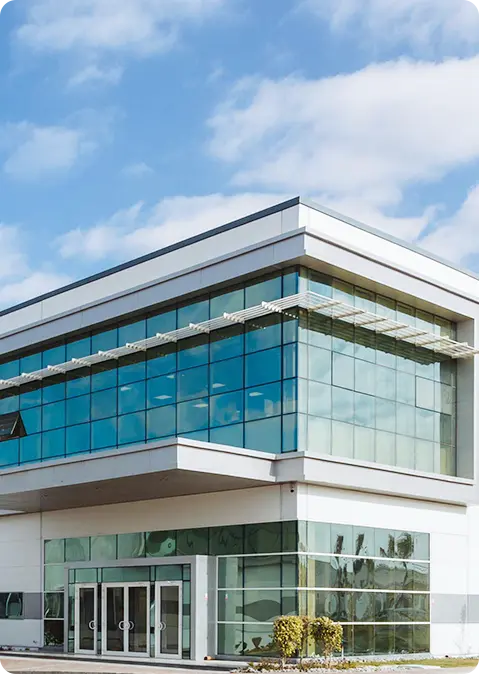
Quality control is central to our engineering approach. Our manufacturing plant spans over 208 acres, featuring 50,000 square meters of specialized production space. By investing in precision machine tools, we maintain close control over tolerances and structural alignment:
In addition, we collaborate with academic institutions like Tsinghua University and Shandong University to refine weld joint designs and evaluate fatigue life. This research supports our product engineering, ensuring safety and performance in the field.
Explore our full range of heavy-lifting equipment, engineered for high productivity and structural durability.
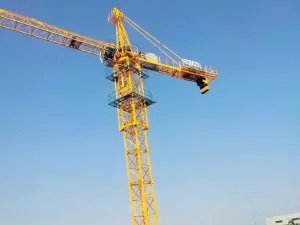
18-ton flat-top model designed for maritime loading yard construction and heavy civil works.
View Product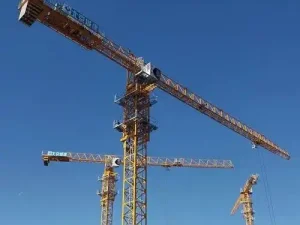
20-ton capacity topless crane with extended jib configuration for wide footprint layouts.
View Product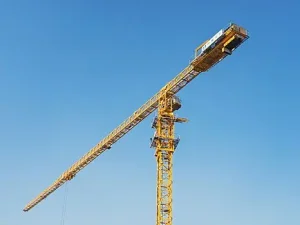
Reliable hammerhead crane optimized for resort construction and municipal building sites.
View Product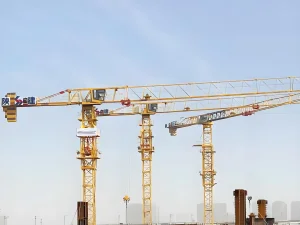
Classic hammerhead configuration offering high tip-load capacities for structural precast lifting.
View Product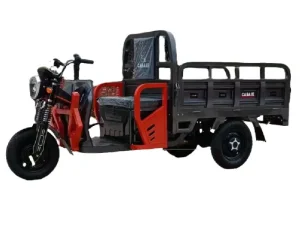
Zero-emission cargo tricycle for moving tools and materials on site, supporting green building targets.
View Product
A 20-ton maximum load configuration designed for heavy bulk industrial handling.
View Product
Designed for high-torque assembly operations, providing stable control at height.
View Product
Advanced luffing drive controls provide smooth positioning under heavy load conditions.
View ProductOur services extend beyond design and manufacturing. Standard shipping procedures require specialized flat racks and container packing to prevent damage from oceanic moisture during transit. We coordinate shipping logistics from China directly to major deepwater ports in Trinidad and Tobago, including the Port of Port of Spain and the Port of Point Lisas.
We supply a comprehensive documentation package to simplify the customs clearance process in Trinidad and Tobago. This includes manufacturer certificates of conformity, full metallurgical test reports for load-bearing components, weld non-destructive testing (NDT) documentation, and certified structural drawing sets. All electronic and control systems use components from global manufacturers (such as Siemens, Schneider, and ABB) to ensure parts availability for maintenance.
For high-capacity installations, Shandong Dazheng provides technical advisors to assist on-site teams during erection, climbing, and commissioning. We conduct dynamic testing, calibrate load-moment limiters, adjust slewing controls, and perform safety reviews before handing over the equipment to site operations.
Modern lifting operations require higher levels of automation to improve safety and coordinate logistics. Shandong Dazheng is integrating several digital features into our product range:
Our newer models can be equipped with remote monitoring systems. An array of sensors tracks operational parameters including load magnitude, wind speed, slewing angle, and mast structural strain. This data is transmitted via cellular networks to a secure interface, allowing project managers and equipment owners to track utilization and identify potential maintenance needs.
Multi-crane construction sites require coordinated movements to avoid contact. Our integrated anti-collision and zone protection systems define exclusion areas (such as nearby utility lines or neighboring properties). If a crane jib approaches these boundaries, the system slows and stops movement to maintain safety clearances.
To reduce energy consumption and mechanical wear, all crane movements (hoisting, trolleying, slewing) utilize VFD control systems. This ensures smooth acceleration and deceleration curves, reducing structural shock loads and improving positioning accuracy to within millimeters.
Answers to technical, regulatory, and logistics questions concerning tower cranes in Trinidad and Tobago.
Connect with our technical sales engineers to discuss wind load requirements, crane configurations, and delivery schedules for Trinidad and Tobago.
Send Inquiry Now Dazheng Crane