Engineered to withstand rigorous dynamic stresses, our flagship structural cranes and transport equipment deliver industry-leading safety ratios and load efficiency.
An in-depth guide to modern hydraulic climbing mechanisms, metallurgy specifications, structural design guidelines, and the Chinese manufacturing efficiency advantage.
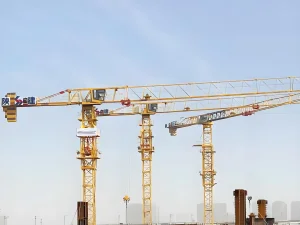
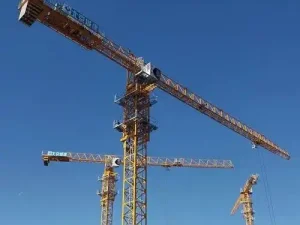
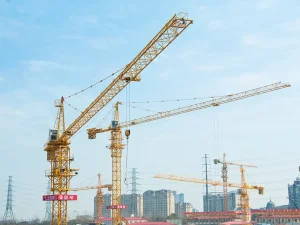
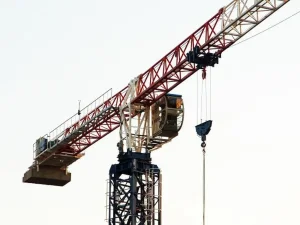
The tower crane jack up system (commonly known as the telescoping or self-climbing system) represents the mechanical core that enables tall buildings to rise continuously. Unlike fixed-height heavy machinery, a tower crane is dynamic; it expands along its vertical axis by introducing additional mast sections into its own support tower. The tower crane jack up system hardware is the structural and hydraulic assembly that lifts the top parts of the crane (the rotating cabin, jib, counter-jib, and slewing unit) to create a void, allowing a new mast section to be pinned or bolted securely into place.
A failure in the telescoping assembly during climbing operations has serious safety and financial consequences. Consequently, structural engineers, fleet managers, and procurement officers must understand the mechanical properties, load pathways, and material requirements of these components. This whitepaper analyzes these elements, contrasting traditional configurations with modern innovations, and explores why leading developers purchase key climbing hardware from high-precision manufacturers in China, specifically Shandong Dazheng International Trade Co., Ltd.
Rapid urbanization, high-density residential high-rises, and major infrastructure projects (such as suspension bridge pylons and cooling towers) have driven the demand for taller crane heights. According to global construction equipment forecasts, the market for self-climbing crane technologies is moving toward larger crane models (such as luffing and flat-top models exceeding 300 t•m capacities) that require stronger hydraulic climbing components.
Currently, construction sites face constraints from strict building codes (e.g., EN 14439 in Europe, ASME B30.3 in the United States, and AS 1418 in Australia). These rules govern not only the operational safety of the crane but also the climbing phases when the crane is temporarily unanchored and vulnerable to wind load variations. Because of these regulations, EPC (Engineering, Procurement, and Construction) companies require verifiable documentation, NDT (Non-Destructive Testing) reports, and standardized design safety factors for all structural connection components, hydraulic cylinders, and guide systems.
Specifies structural wind-load conditions during the climbing phase, requiring hydraulic cylinder lock valves and fail-safe mechanical stop pins.
Governs the design, inspection, and testing margins for tower cranes used in North America, focusing on fatigue limits and material certificates.
The choice between internal climbing frames (inside elevator shafts) and external telescoping cages changes the load dynamics on structural pins and guides.
The telescoping mechanism is a complex structural assembly. To guarantee safety and performance, every component must be manufactured to precise tolerances:
• Max Structural Eccentricity: < 0.05% of mast height under wind load during climbing.
• Connection Pin Fitment Tolerance: H7/g6 precision class to limit axial and radial play.
• Minimum Impact Energy: Charpy V-notch energy values tested to 27 Joules at -20°C for cold-weather construction sites.
The manufacturing of tower crane components requires high-precision equipment. Standard welding and manual machining cannot consistently meet the sub-millimeter alignment tolerances required for heavy structural steel telescoping cages.
Shandong Dazheng International Trade Co., Ltd. operates a modern manufacturing plant covering 208 acres, with 50,000 square meters of modern production workshops. The facility is equipped with advanced industrial manufacturing machinery:


Shandong Dazheng's engineering processes are backed by a skilled team of machinery experts. To maintain our technological edge, we have established close technical cooperation with Tsinghua University and Shandong University, two of China's top academic and engineering research institutions.
This partnership enables us to utilize advanced research methodologies:
These scientific tools, combined with modern factory equipment, allow us to customize precision machinery parts to meet specific project needs. We also provide technical consulting, onsite installation guidelines, and maintenance services to ensure a safe and smooth operation.
Tower crane jack up systems are deployed in various climates and geographic environments, each presenting unique engineering challenges. Our components are designed to adapt to these varied conditions:
In offshore wind installations and coastal skyscrapers, saltwater air and wind shears speed up rust and increase structural deflection. Our hardware uses C5-M marine-grade painting and hot-dip galvanized components to resist corrosion and ensure long-term durability.
In northern climates, steel can become brittle, and standard hydraulic oil thickens. We build our telescoping cages using Q345E/Q460E steel, which undergoes Charpy impact testing at -40°C, and use low-viscosity hydraulic oils to maintain performance in cold conditions.
In crowded cities, cranes often operate in tight spaces, climbing internally within elevator shafts. This requires compact internal climbing frames and precise locking hardware to safely transfer load stresses to the building's concrete walls.
Shandong Dazheng's products are widely used in China and exported to markets worldwide, including Southeast Asia, Europe, North America, and other regions. We manage international supply logistics to ensure safe and timely delivery.
All large structural components (such as telescoping cages and climbing frames) are designed to fit standard shipping containers or flat racks, reducing transit costs. Steel components are treated with rust-preventative waxes and protective shrink wrapping to prevent corrosion during ocean transport.
Our international shipping protocols include:
The tower crane climbing sector is adopting smart technologies to improve safety and operational efficiency:
Expert insights on the engineering, safety, operation, and procurement of tower crane jack up system hardware.
Explore our full range of heavy-duty construction machinery and industrial electric transport units engineered for high reliability.
 Dazheng Crane