Choosing the right Tower Crane For Construction begins with the site, not the catalogue. A 60-metre tower crane may look impressive beside a concrete frame. Yet its capacity can fall sharply at maximum radius. Wind, ground bearing pressure, delivery access, power supply, and dismantling space also matter.
Industry data supports careful planning. CPWR’s analysis of U.S. crane-related fatalities recorded 297 worker deaths between 2011 and 2017. The International Labour Organization also identifies lifting operations as a serious construction risk. These figures do not select a crane for you. They show why engineering review and competent supervision remain essential. Mike Parnell, a recognised crane-training specialist and president of Industrial Training International, has stated, “There is no substitute for a good lift plan.” That principle should guide every comparison.
This guide will examine load charts, jib length, maximum capacity, foundation design, climbing systems, transport, rental support, and operator training. It will also consider real working conditions. A narrow urban site needs different answers from a large industrial project. A 10-tonne load at 15 metres is not the same as 10 tonnes at 60 metres. Small planning errors become expensive very quickly. Sometimes, the cheapest crane is the slowest choice. Sometimes, the largest crane is simply unnecessary. Market forecasts from firms such as Mordor Intelligence and Grand View Research suggest continued construction-crane growth, but forecast figures vary by methodology. They should inform decisions, not replace them. The safest choice is the crane that matches the lift, the ground, the crew, and the project’s uncomfortable details.
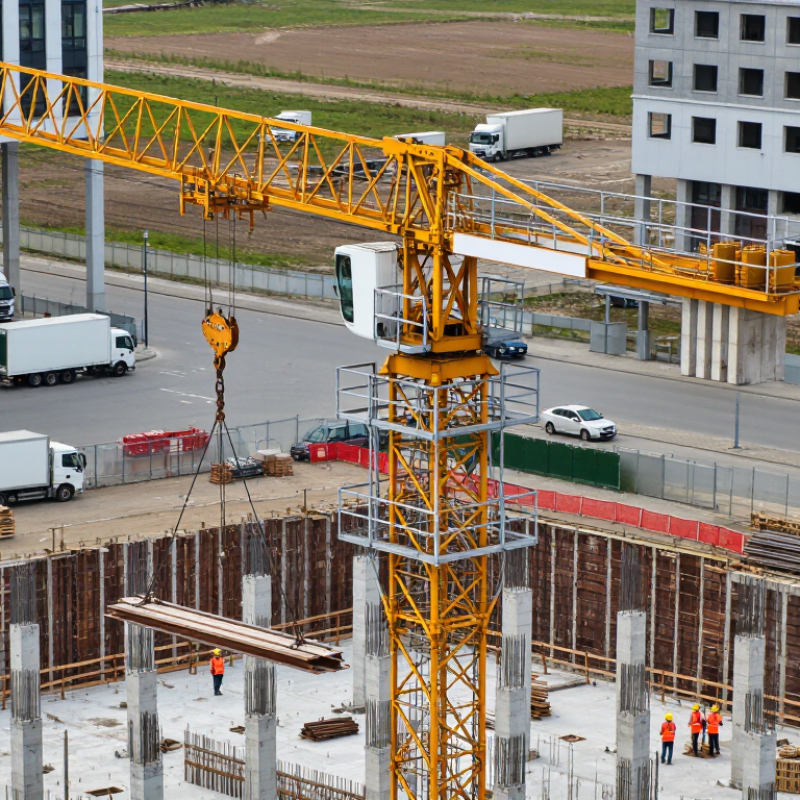
How to Choose the Best Tower Crane for Construction?
Define the Project Requirements for Tower Crane Selection
Choosing a tower crane begins with the project, not the equipment catalogue. Define the maximum load, lifting radius, hook height, and construction sequence. A 12-ton lift near the mast differs greatly from a 4-ton lift at maximum radius. Record the heaviest component, delivery dates, foundation conditions, and available assembly space. OSHA data recorded an average of 82 construction crane fatalities annually between 1992 and 2006. The International Labour Organization also reports that construction represents 30–40% of global occupational deaths. These figures are dated, but still difficult to ignore.
Tips: Build a simple load chart before requesting quotations. Mark the heaviest lifts on the site plan. Check wind exposure, nearby structures, power supply, road access, and local inspection requirements. Confirm whether the crane can operate safely during each construction phase. Do not select capacity from the headline tonnage alone. It can mislead.
A professional site survey should verify soil bearing capacity and foundation design. Review the manufacturer’s load charts and applicable standards, such as EN 14439 where relevant. Consider climbing requirements if the building will rise significantly. A small oversizing allowance may improve safety, but excessive capacity can increase rental, transport, and installation costs. A neat spreadsheet can still miss changing wind conditions or congested work zones. That is where experienced lifting planners should challenge the original assumptions.
Choosing a tower crane starts with the lifting configuration, not the advertised maximum capacity. A hammerhead crane suits open sites with repeated lifts and long horizontal travel. Its fixed jib offers efficient coverage, but the counter-jib needs clear space. A luffing-jib crane works better in dense urban areas. Its changing jib angle reduces oversailing and supports narrow sites. The trade-off is slower repositioning and more demanding planning. Self-erecting cranes fit low-rise projects with limited logistics. They offer quick setup, but their capacity and height are usually lower.
Compare the load chart at actual radius. A 10-tonne rating near the mast may become only 2 tonnes at the jib tip. Two-fall reeving can improve speed, while four-fall reeving usually improves control and capacity.
Check hook height, daily lifting cycles, wind limits, foundation design, and tie-in levels. Flat-top configurations can simplify multiple-crane coordination, though they may increase collision-control requirements.
The wrong configuration creates waiting time.
Workforce capability also matters. The Associated General Contractors 2024 Workforce Survey found that 94% of construction firms struggled to fill open positions. That shortage makes intuitive controls, training, and maintenance support more valuable. The U.S. Bureau of Labor Statistics recorded 1,075 fatal work injuries in private construction during 2023, reinforcing the need for documented lift plans and competent supervision.
A practical warning: teams often select by peak capacity alone. That shortcut is incomplete. Real productivity depends on radius, repetition, wind exposure, and operator visibility. Recheck the choice with a project-specific load schedule.
Selecting a tower crane begins with the load chart, not the advertised maximum capacity. Record the heaviest load, lifting radius, and required lifting frequency. A crane rated for 10 tonnes may handle far less at maximum reach. Include slings, buckets, concrete, and temporary lifting attachments in the calculation. Leave a controlled safety margin.
Guesswork is expensive.
Height and reach must match the building envelope and the daily lifting route. Measure the highest placement point, not only the roof level. Check hook height under the worst working condition. A long jib improves coverage but can increase wind exposure and foundation forces. Overlapping crane zones require a carefully planned movement sequence.
It sounds simple.
Site conditions often decide the practical choice. Confirm soil bearing capacity, excavation limits, groundwater, access roads, and available assembly space. A crane base near a basement edge may need specialist structural review. Inspect overhead lines, neighboring buildings, public areas, and aircraft restrictions where relevant. Local wind data also matters, especially for tall, exposed structures.
Experienced teams review the manufacturer’s load charts with a qualified lifting engineer before procurement. They also check tie-in levels, climbing stages, power supply, emergency access, and dismantling plans. I have seen schedules fail because delivery vehicles could not reach the setup area. That detail was missed.
Recheck it.
Share the final lift plan with operators, supervisors, and structural professionals, then revise it when the site changes.
How to Choose the Best Tower Crane for Construction?
A suitable tower crane begins with verified safety standards, not lifting capacity alone. Check whether the crane meets current national regulations and recognized engineering requirements. Ask for inspection records, load charts, structural calculations, and maintenance history. A competent engineer should review ground pressure, foundation design, tie-in points, and wind limits before approval. Small documentation gaps can become expensive problems.
Installation conditions deserve careful attention. Measure the site boundary, nearby buildings, overhead services, traffic routes, and available assembly space. Confirm how mobile equipment will deliver and erect the crane. The foundation must match soil conditions, drainage, and expected loads. Plan exclusion zones around the counterweight and lifting radius. Leave room for safe dismantling. Tight sites often expose weaknesses in the original plan.
Operator requirements are equally important. Choose trained operators who understand load charts, signaling systems, emergency procedures, and weather restrictions. They should communicate clearly with appointed signalers and stop work when visibility becomes poor. Practical experience matters, but it must support formal certification and regular assessment. A checklist helps. It is not perfect. Supervisors should observe real lifting tasks, review near misses, and correct unsafe habits early. Even experienced teams can misjudge a swinging load or changing wind. That is why daily briefings, documented inspections, and clear authority to halt operations remain essential.
Assess safety standards, installation needs, rated capacity, and operator requirements before selecting a crane configuration.
The chart shows representative rated-capacity reference points for common tower-crane configurations. Actual capacity depends on jib length, working radius, wind conditions, foundation design, lifting height, and the manufacturer's load chart. Confirm compliance with applicable requirements such as OSHA 1926 Subpart CC, EN 14439, or ISO 12480-1, and ensure operators are trained, qualified, and authorized under local regulations.
Choosing a tower crane starts with lifecycle cost, not the lowest rental quote. McKinsey Global Institute’s 2017 construction report found productivity grew only 1% annually over two decades. Poor crane utilization can worsen that gap. Compare purchase, transport, erection, dismantling, operator training, energy, inspections, and financing. A crane saving 8% upfront may lose money after repeated relocation delays.
Maintenance deserves a line-by-line review. Request service records, inspection intervals, spare-parts availability, and average repair response time. On a busy site, one idle shift can delay concrete pours, steel installation, and several subcontractors. Use RICS Whole Life Carbon Assessment guidance to examine the crane’s full operating life, not only its initial cost. Electric drives may reduce site emissions, but their value depends on electricity access and technician skills.
Long-term performance depends on load charts, wind limits, foundation conditions, and expected project duration. Select capacity with measured lifting data, not optimistic assumptions. McKinsey’s report also links fragmented project processes with persistent cost overruns and delays. That matters when crane scheduling is weak. I would test three scenarios: normal use, peak wind, and a two-week repair. The result may be uncomfortable. A used crane with strong records can outperform a newer unit, but only after independent inspection, structural checks, and a realistic residual-value estimate.
Record the heaviest load, lifting radius, hook height, and construction sequence. Include slings, buckets, concrete, and temporary attachments. Do not trust headline tonnage alone. That can mislead.
Rated capacity usually decreases as the lifting radius increases. A crane may lift 10 tonnes near its mast, but much less at full reach. Mark the heaviest lifts on the site plan. Guesswork is expensive.
Measure the highest placement point, not only the roof level. Check hook height during the worst working condition. A longer jib improves coverage but increases wind exposure. More reach is not always better.
Check soil strength, excavation limits, groundwater, access roads, and assembly space. Review nearby buildings, overhead lines, public areas, and local wind conditions. A crane base near a basement edge may require structural review. Small details matter.
Use measured lifting data and leave a controlled safety margin. Avoid excessive oversizing because it raises transport, installation, and rental costs. Review wind limits and changing work zones. The spreadsheet may miss reality.
Plan movement sequences before operations begin. Define tie-in levels, climbing stages, emergency access, and operator communication. Share the lifting plan with supervisors and structural professionals. Revise it when the site changes.
Compare transport, erection, dismantling, training, energy, inspections, financing, and relocation costs. One delayed shift can affect concrete crews, steel installers, and subcontractors. A cheaper quote may become expensive later. That outcome is easy to underestimate.
Request service records, inspection intervals, spare-parts information, and repair response times. Independent inspection is important for used equipment. Check structural condition and realistic remaining value. Newer does not always mean better.
Compare normal operation, peak wind, and a two-week repair scenario. Review foundation conditions, project duration, power supply, and technician availability. Electric systems may reduce emissions where reliable power exists. The result may be uncomfortable.
Choosing the best Tower Crane For Construction begins with a clear understanding of the project’s requirements, including building size, lifting frequency, material types, site layout, and expected construction schedule. Different tower crane types and lifting configurations offer distinct advantages, so selection should consider available space, mobility, maximum load, working height, jib reach, and ground conditions. A detailed assessment of surrounding structures, wind exposure, access routes, and foundation capacity can help ensure the crane operates efficiently and safely.
Safety standards, installation procedures, dismantling requirements, and operator qualifications are equally important. The selected crane should support reliable communication, routine inspections, appropriate safety devices, and practical maintenance planning. Beyond the initial purchase or rental price, decision-makers should compare transportation, assembly, energy use, servicing, downtime risks, and expected service life. A well-balanced evaluation of performance, safety, site compatibility, and long-term cost will help construction teams choose a tower crane that improves productivity while maintaining dependable operation throughout the project.

Dazheng Crane